The Great King Ashoka
King Ashoka's Life



King Ashoka, Statues, Edicts, Maps, etc
King Ashoka's Biography
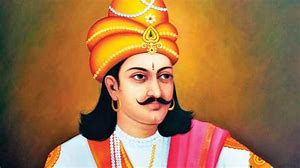
King Ashoka was a member of the Maurya family , the first leaders to unite the various kingdoms of India. The Mauyras, including Ashoka, fought wars of conquest to build their empire. Then a great change came over Ashoka, and he turned to peaceful ways of keeping India untied. When King Ashoka was a young man, he was sitting on his horse one day, looking over the bloody battlefield. Men and animals lay dying under the hot sun. Ashoka could hear the wounded groaning in pain. With his growing horror he thought of the thousands of people who had been killed or enslaved in his family's ongoing quest for land. In that moment, the king swore to give up the ways of violence. Ashoka promise led him to the Buddhist religion. Rather then rule by war, he chose to create an empire based on Buddhist values. he spread Buddhist beliefs through edicts, official orders or messages, carved on walls, rocks, and tall pillars.
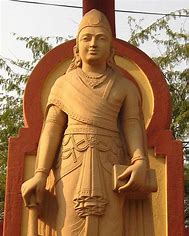
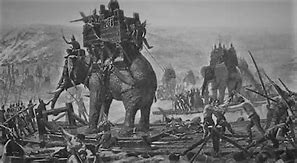
The Mauryas were the first leaders to unify India. Chandragupta Mauyra began to build the Mauryan Empire in the 320s B.C.E. He saw that the kingdoms of northern India were weak. Chandragupta used his great army of 700,000 soldiers, with 9,000 elephants, to overthrow the rulers of these kingdoms. He conquered and untied all of northern India. Chandragupta Maurya kept his empire strong by using force whenever necessary. He was deeply afraid of enemies. He used his powerful army, a network of spies, and torture to keep his subjects in line. Chandragupta's rule was harsh, but it was successful in some ways. He created a strong central laws. He made sure farmers had water for their crops. To help connect the parts of his empire, he built a royal road more than one thousand miles long. toward the end of his life, Chandragupta gave up his power. Tradition says that he became an ascetic, or a person who has given up worldly pleasures. Meanwhile, the empire grew even larger. Under the rule of Chandragupta's grandson King Ashoka, it included nearly all of the Indian subcontinent.
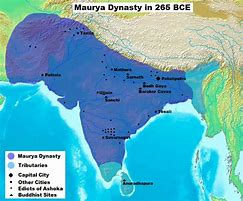
The Mauryan Empire reached its height during the region of King Ashoka. He ruled the empire from about 269 to 232 B.C.E. Ashoka expanded the empire to the south and east through a series of wars. Then, after one very brutal battle, he made his decision to reject violence and find a more peaceful way to rule. Ashoka decided to embrace Buddhism. He supported the Buddhist values of love, peace, and nonviolence. As a Buddhist, he respected all living things. He gave up hunting and became a strict vegetarian. He visited holy Buddhist sites. Perhaps most surprisingly, Ashoka gave up wars of conquest. Never again would he fight another kingdom for its land. Ashoka wanted his people to follow the Buddhist path. He urged them to be respectful , kind, and moral. He told the people to treat their servants well, to respect their elders, and to tolerate those who practiced different religions. Ashoka saw himself as a wise and loving father figure. he often referred to the people he ruled as his children. Ashoka spread Buddhism beyond India. Not all of Ashoka's actions reflected Buddhism values. For example, under his rule, the practice of slavery was allowed, and people could be executed for serious crimes. Ashoka also continued to maintain a strong army. Although he gave up battles of conquest, he did not return any of the lands the Mauryas had already conquered.
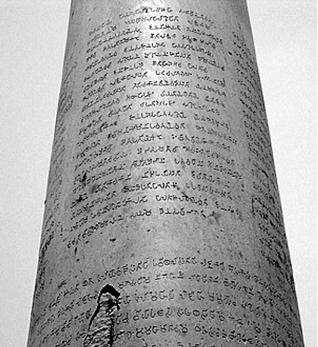
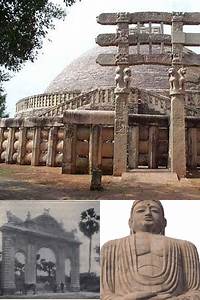
Ashoka wanted a strong, united empire guided by Buddhist values. To spread those values to his people, he had edicts carved into the walls, rocks ,and tall pillars throughout the empire, in places where the greatest number of people could see them. Ashoka's edicts were designed to promoted Buddhist value, general warfare, justice, and security. the spread of Buddhism in Asia was Ashoka's most lasting legacy. Ashoka's four main goals were intended to give his empire a strong foundation. His reign is still remembered in India as a time of great achievements and progress. But his dream of a united empire did not last. About 45 years after his death, the empire broke apart into separate kingdoms. Ashoka sent his son ton introduce Buddhism to Ceylon. Later, around the start of the Common Era, Buddhism spread from northwestern India Central Asia. From there, it traveled to China, Korea , and Japan.
The Mauryas were the first leaders to unify India. Chandragupta Mauyra began to build the Mauryan Empire in the 320s B.C.E. He saw that the kingdoms of northern India were weak. Chandragupta used his great army of 700,000 soldiers, with 9,000 elephants, to overthrow the rulers of these kingdoms. He conquered and untied all of northern India. Chandragupta Maurya kept his empire strong by using force whenever necessary. He was deeply afraid of enemies. He used his powerful army, a network of spies, and torture to keep his subjects in line. Chandragupta's rule was harsh, but it was successful in some ways. He created a strong central laws. He made sure farmers had water for their crops. To help connect the parts of his empire, he built a royal road more than one thousand miles long. toward the end of his life, Chandragupta gave up his power. Tradition says that he became an ascetic, or a person who has given up worldly pleasures. Meanwhile, the empire grew even larger. Under the rule of Chandragupta's grandson King Ashoka, it included nearly all of the Indian subcontinent.
The Mauryan Empire reached its height during the region of King Ashoka. He ruled the empire from about 269 to 232 B.C.E. Ashoka expanded the empire to the south and east through a series of wars. Then, after one very brutal battle, he made his decision to reject violence and find a more peaceful way to rule. Ashoka decided to embrace Buddhism. He supported the Buddhist values of love, peace, and nonviolence. As a Buddhist, he respected all living things. He gave up hunting and became a strict vegetarian. He visited holy Buddhist sites. Perhaps most surprisingly, Ashoka gave up wars of conquest. Never again would he fight another kingdom for its land. Ashoka wanted his people to follow the Buddhist path. He urged them to be respectful , kind, and moral. He told the people to treat their servants well, to respect their elders, and to tolerate those who practiced different religions. Ashoka saw himself as a wise and loving father figure. he often referred to the people he ruled as his children. Ashoka spread Buddhism beyond India. Not all of Ashoka's actions reflected Buddhism values. For example, under his rule, the practice of slavery was allowed, and people could be executed for serious crimes. Ashoka also continued to maintain a strong army. Although he gave up battles of conquest, he did not return any of the lands the Mauryas had already conquered.
Ashoka wanted a strong, united empire guided by Buddhist values. To spread those values to his people, he had edicts carved into the walls, rocks ,and tall pillars throughout the empire, in places where the greatest number of people could see them. Ashoka's edicts were designed to promoted Buddhist value, general warfare, justice, and security. the spread of Buddhism in Asia was Ashoka's most lasting legacy. Ashoka's four main goals were intended to give his empire a strong foundation. His reign is still remembered in India as a time of great achievements and progress. But his dream of a united empire did not last. About 45 years after his death, the empire broke apart into separate kingdoms. Ashoka sent his son ton introduce Buddhism to Ceylon. Later, around the start of the Common Era, Buddhism spread from northwestern India Central Asia. From there, it traveled to China, Korea , and Japan.

Here's an Inspiring Message Below...
“Just Do It!!! ”
― Nike
Contact The Writer
- Sterling Heights, Michigan, United States